

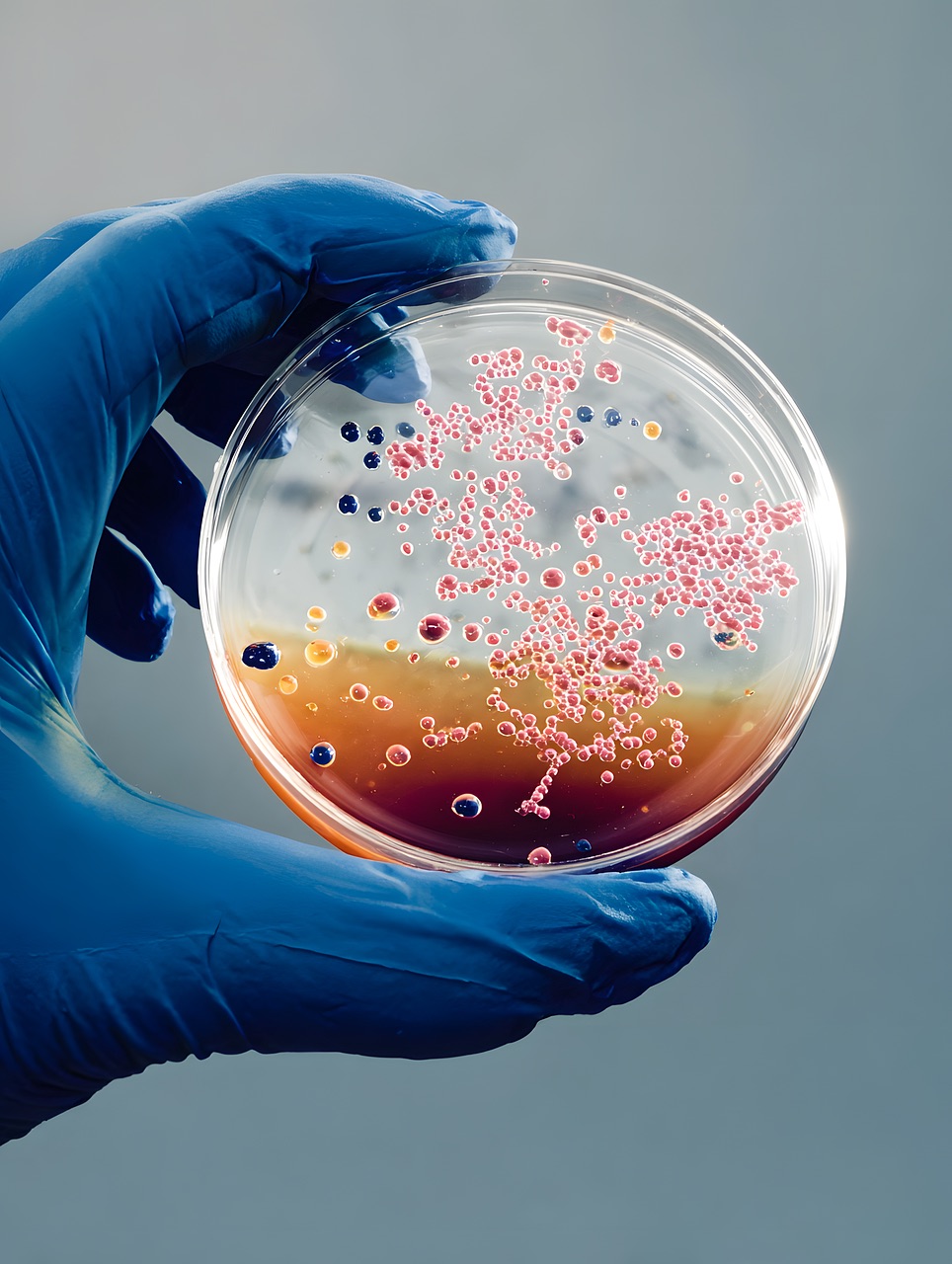
Live microbes on a Petri dish prior to genetic engineering. Image: Pixabay
Microbiota-based products, supplements, or therapies can be used in combination with stem cell treatments to create a more hospitable and welcoming environment for transplanted stem cells to take hold and grow. When used in conjunction with stem cell treatments, these microbiota-based therapies are known as microbial adjuncts, non-essential but beneficial additions to the primary treatment (in this case, stem cell transplantation).
Microbial adjuncts can calm the immune system, thereby preventing unnecessary attacks on transplanted stem cells. They can be broken down into five categories: metabolites/postbiotics, live microbes/probiotics, microbiome conditioning, ex vivo stem cell priming, and bioengineered microbes. All five categories of microbial adjuncts enhance stem cell therapies by modulating the immune system, promoting stem cell proliferation and differentiation, improving engraftment, and supporting healthy tissue via signalling molecules and metabolites.
Metabolites/postbiotics
When microbes undergo metabolism, they produce what are known as “metabolites.” These are also referred to as postbiotics. They are the non-living signalling molecules and/or chemical messengers of live bacteria. Some of the most abundant microbial metabolites are short-chain fatty acids (SCFAs), such as butyrate, acetate and propionate. Gut microbes produce SCFAs when they ferment fibre. SCFAs reduce inflammation and calm the immune system by promoting regulatory T cells; this allows stem cells to grow in a healthy environment. They also influence which specific cell type stem cells will become once they differentiate.
Other metabolites include tryptophan derivatives, B vitamins and lipid mediators, amongst many others. These all play a role in immune modulation and regulation, and each has a wide range of subtle effects on the host. Because they are stable, controllable, non-living, and targetable to specific functions, metabolites are the safest type of microbial adjunct.
Live microbes/probiotics
Patients undergoing stem cell therapies can receive live microbes, rather than the metabolites of live microbes. They are generally considered less safe than metabolites due to their unstable and living nature. In immunocompromised patients, there is a risk of infection when live microbes are administered. Additionally, different species and strains have different effects on host physiology, depending on a variety of factors, some not yet elucidated.
It is unclear whether probiotic supplementation is transient or if the microbes are able to assimilate into the microbiome, altering the composition chronically rather than acutely. It might be species-specific, like if some can survive more than others through stomach acid, eventually making their way to the colon. Usually, strains of Lactobacillus and Bifidobacterium are used, as these have shown promise in clinical studies to promote stem cell proliferation and differentiation, support gut health, and reduce the risk of graft-versus-host disease (GVHD).
Microbiome conditioning
Microbiome conditioning encapsulates a variety of therapies that modulate the microbiome, ranging from diet interventions to fecal microbiota transplants. For example, increasing fibre in the diet can lead to an increased production of SCFAs, which reduce inflammation, as mentioned above. Additionally, fibre intake can be increased via prebiotic supplementation; prebiotics are non-digestible fibres that feed beneficial bacteria in the gut. An increase in these beneficial bacteria also leads to increased SCFA production. Similarly, increasing antioxidants in the diet can foster an ideal environment for stem cell proliferation and differentiation by reducing oxidative stress and supporting the metabolic functioning of the host.
Fecal microbiota transplants (FMTs) are a higher-risk intervention than diet changes. FMTs involve taking the entire gut microbiome composition of a healthy individual (via fecal matter) and transplanting the fecal matter into the patient’s colon. There is not yet a standardized procedure for FMTs, and there remain risks for infection, particularly in immunocompromised patients. However, when successful, gut health can be restored, and the risk of GVHD can be greatly reduced or even eradicated.
Microbiome conditioning interventions are personalized and patient specific. With something as complex as the microbiome, some interventions could unintentionally be doing more harm than good. More research is needed, but it is difficult to perform when microbial communities in the human gut are constantly evolving and communicating in myriad ways, with both each other and their human host.
Ex vivo stem cell priming
Ex vivo stem cell priming is treating stem cells outside the body before they are transplanted. The goal is to make them more effective once they are infused into the body. One way to do so is with microbial metabolites. For example, hematopoietic stem cells can be modulated with SCFAs to influence differentiation, which is what stem cells decide to become once transplanted. Although research for microbial priming of stem cells is still preclinical at this stage, and limited to mice, it is an exciting and trendy area.
Bioengineered microbes
The bioengineering of live microbes is currently one of the most cutting-edge niches of synthetic biology, an area of science focused on designing biological parts or entities. Some ambitious and ongoing goals of synthetic biology are creating bacteria that can digest plastic, or engineering organisms that can produce fuel. The regulation of synthetic biology is messy, however, due to the fact that bioengineering leads to genetically modified organisms (GMOs). Therefore, bioengineered microbes are far from clinical use and are likely a therapy of the future. Nonetheless, they could offer a more targeted approach than typical probiotic supplementation, as long as off-target effects are mitigated. Bacteria could be modified to produce specific metabolites that benefit stem cell treatments (i.e. bacteria that produce VEGF and thereby increase angiogenesis of mesenchymal stromal cells).
In conclusion, the microbiome can be harnessed to improve the efficacy of stem cell therapies, largely by promoting proper immune tolerance, which in turn reduces inflammation, lowers the risk of GVHD, and supports healthy tissue growth and repair. But harnessing the microbiome isn’t easy, with the exasperating complexity of microbe-microbe interactions and microbe-host interactions, usually via metabolites. It is essential that we do not underestimate or overestimate the power of synthetic biology and bioengineering of complicated microbiota compositions, as bacteria have been around for billions of years and are capable of horizontal gene transfer and rapid evolution. The immune system and the microbes that live in and on us are so intricately connected, which is what makes microbiome modulation and microbial adjuncts such a strong determinant of immune function, inflammation, and stem cell transplantation success.

Ellie Kroeger
Latest posts by Ellie Kroeger (see all)
- Microbial adjuncts: How microbiome modulation influences stem cell therapies - February 24, 2026
- The future of infertility treatments - November 18, 2025



Comments