

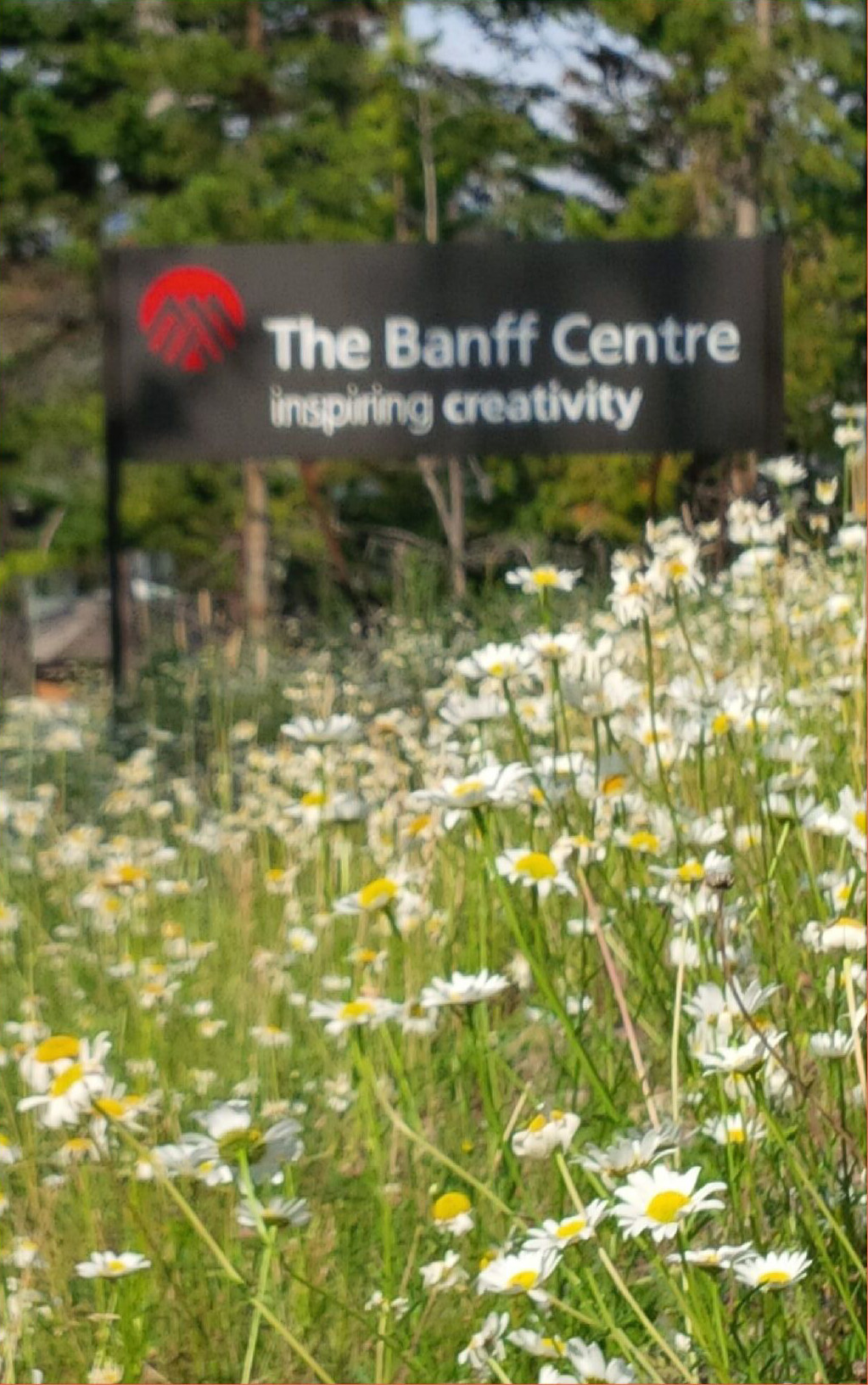
Photo: Lisa Willemse
I’m starting this post with an image that more or less sums up my life over the past two weeks, which has been rather intensely focused on creativity. This was the second time I traveled to Banff to be part of the Science Communications program at the Banff Centre, a very worthwhile sojourn for scientists or science communicators; you can read more about its awesomeness here.
Creativity is a slippery, wiggly fish. Anyone who has needed to draw upon it knows how challenging it is to catch and hang on to. Writers get blocked, artists withdraw, musicians lose their edge. Entire systems ebb out of use due to a lack of innovation (or sometimes because of innovation). And then there’s extinction.
Worse still may be ideas and beginnings that get mothballed when the inevitable critic — internal or external — begins squawking (case in point: I nearly ditched this article several times because I thought it was crap. You might think so too; if so, click here for something with higher entertainment value).
If you’re still with me, or back from the above creative diversion, then you’ll note that this post has successfully pushed far enough through phase 4 of the 6 stages of creative development as outlined by One Who Knows, faculty member John Rennie, during the first few days of the Banff program.
Slide of the day at #banffsci14. I only made it through a few of the steps today… pic.twitter.com/zMBDh5m1rt
— Jared Stang (@StangJared) July 31, 2014
The above process is true of just about every pursuit, be it artistic, scientific, athletic or, heck, any job at all. There are two brothers who work on a road crew for a highway extension near my town. Both of them hold signs for about 10 hours each day, flipping them from “Stop” to “Slow” to allow construction vehicles on and off the highway. It’s probably among least creative jobs on the planet. And yet, every morning I drive past them on my way to work, in the moments without trucks, they’ve turned those octagonal signs into air guitars so they can rock out to the music from passing cars. I usually open my window and turn up the volume for them, but I’ve wondered if either of them ever thought their creative idea to alleviate boredom was shit, especially if they’ve had a negative reaction from a commuter.
There are always moments when we are faced with the dreaded blinking cursor on a blank page (it took me about three hours and numerous false starts to get this post going, for example), or moments when we think, “why bother?” My pithy answer is that sharing our creativity makes us more human by making us vulnerable. And that’s what keeps us connected.
So, with a final word on taking the leap, I’ll leave you with a video, “An Invocation for Beginnings” by zefrank (warning: language), with thanks to another Banff faculty member and truly creative person Rose Eveleth for reminding me this was out there.


Lisa Willemse
Latest posts by Lisa Willemse (see all)
- Toronto team tackling unmet need in cell manufacturing using synthetic biology - January 9, 2020
- Medicine by Design-funded researchers devise new strategy to improve the safety of cell therapies - February 22, 2019
- Right Turn: These three videos show why we should be impressed by our young stem cell researchers - November 18, 2016



Thanks, John. Whether you created it or found it just in time, it was perfect. And if anyone knows the Nameless Meme Maker, let us know!
A splendid reflection on the Banff SciComm experience this year, Lisa, thank you. And thanks very much for being part of it again!
Also, just to clarify: the credit for that 6 steps of the creative process slide shouldn’t go to me! It was something being kicked around Facebook that I spotted literally the night before I was giving my Banff talk and I included it because it was so dead-on accurate. Thank you, Nameless Meme Maker who originated this!