

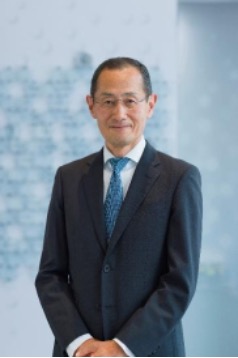
Shinya Yamanaka. Image credit: Center for iPS Cell Research and Application, Kyoto University
Back in August 2016, Signals celebrated ten years of induced pluripotent stem cells (iPSCs) by hosting its first-ever blog carnival, in which contributors each wrote posts answering the same question: With useful treatments for diseases like heart failure and diabetes yet to be fully realized, “when [will iPSCs deliver] commercial products or new revolutionary medical treatments, and why?”
Some contributors were brave enough to make predictions. Michael Cea named Kyoto University’s Parkinson’s disease program, led by Jun Takahashi, as one to look out for, describing it as the leading iPSC Parkinson’s program and expecting it to enter the clinic in 2017. It got there in 2018, so not far off. Meanwhile, Malgosia Pakulska reported that Gordon Keller, the Toronto stem cell scientist who co-founded BlueRock Therapeutics later that year, expected iPSC-based therapies within the next ten years. David Kent was more cautious about therapies for diabetes, noting that patients may have to wait decades for a treatment that works for them.
Now, with Japan approving the first iPSC-derived therapies this year, and researchers gathering in Kyoto in October 2026 for the 20th anniversary, it feels like a good moment to look back at those predictions and see how they’ve played out.
As Signals readers will likely know, in 2006, Shinya Yamanaka and Kazutoshi Takahashi at Kyoto University discovered that switching on just four genes could reprogram adult mouse cells into pluripotent stem cells, which can become almost any cell type in the body. Human iPSCs followed in 2007, and the discovery won Yamanaka a share of the 2012 Nobel Prize. By the time of the 2016 blog carnival, iPSCs were already earning their keep in disease modelling and drug screening, but using them to replace damaged tissue was still in early clinical testing.
Two therapies reach the market, for now, in Japan
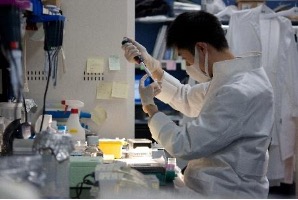
Image credit: Center for iPS Cell Research and Application, Kyoto University
Twenty years on, the first iPSC therapies have been approved where it all started. On March 6, 2026, Japan granted conditional, time-limited approval to two products, one for Parkinson’s disease and one for severe heart failure. It’s a world-first milestone, but not one built on large-scale trials. Japan’s conditional pathway, introduced in 2014, lets regenerative medicines reach patients based on small, early studies showing safety and likely benefit, before larger trials have confirmed it. Companies then have up to seven years to prove the treatment works.
Diabetes isn’t on Japan’s approved list yet, but encouraging signs are emerging, and David Kent was right to be cautious. In 2024, researchers in China reported that a woman with type 1 diabetes no longer needed insulin injections after receiving islets made from her own chemically reprogrammed cells. For the patient, it was life-changing, but for the millions of others living with type 1 diabetes, it’s more of a hopeful first sign than a cure for now. Making it repeatable is where much of the work lies, and some of it was on show in Kyoto, as we’ll see.
Japan’s conditionally approved therapies:
- AMCHEPRY, from Sumitomo Pharma and Racthera, is for people with Parkinson’s disease whose motor symptoms are no longer well controlled by existing medicines. It contains dopaminergic neural progenitor cells, early versions of the dopamine-producing brain cells that Parkinson’s destroys, and it grew out of the very Kyoto University program Michael Cea tipped in 2016. Its supporting Phase I/II trial treated seven patients. At 24 months, four of the six assessed for efficacy had improved on motor tests taken while temporarily off their usual medication, which is encouraging. With no control group, though, nobody can yet say how much of that improvement was down to the cells, and that’s what larger, controlled trials will need to show.
- RiHEART, from University of Osaka start-up Cuorips Inc., treats severe heart failure caused by ischaemic cardiomyopathy (where narrowed arteries starve the heart muscle of blood) when standard treatment hasn’t helped enough. It’s made up of sheets of heart muscle cells attached to the heart’s surface, and it’s been covered by Japan’s public health insurance since September 1 at a list price of ¥53.2 million (about CA$475,000). Japan’s income-based caps on medical bills mean patients pay only a fraction of that, though exactly how much depends on their age and income. The first insured transplant was at Osaka Police Hospital on September 29, 2026, for a woman in her fifties.
Gordon Keller’s company, BlueRock Therapeutics, also shows how far the wider field has come since 2016. Ahead of its 10th anniversary in December, its Parkinson’s therapy, bemdaneprocel, is in a pivotal Phase III trial, although it’s made from embryonic rather than induced pluripotent stem cells. Its iPSC-derived retinal therapy, lemiretprocel, is at an earlier stage in Phase I/IIa, but received orphan drug designations in the U.S. and Europe this year.
So, commercial products? Tick, with an asterisk. There’s still a way to go before we have a fully-fledged commercial therapy proven and available at scale.
The road to revolutionary treatments
The International Society for Stem Cell Research’s 20 Years of iPSC Discovery symposium took place in Kyoto from October 20-22, 2026, opening with a keynote from Prof. Yamanaka himself. According to the organizers’ same-day release, he used it to discuss the regulatory milestone of Japan’s two conditional approvals, as well as the scientific and translational challenges that remain. I wasn’t lucky enough to be there, but his open-access March 2026 article marks the 20th anniversary and gives an assessment of how far the field has come. In it, he points to early trials in macular degeneration and Parkinson’s as evidence that iPSC-derived grafts can be transplanted safely, the groundwork Japan’s approvals were built on.
Other highlights from Kyoto included:
- Syntax Bio reported that its CRISPR-based Cellgorithm platform pushed human iPSCs towards pancreatic beta-cell states in just four days, which could make cells for transplant faster and cheaper to produce. Functional testing is now underway.
- Maike Sander of Berlin’s Max Delbrück Center presented lab-grown islet organoids built with blood vessels and supporting cells, which help beta cells work better and make more realistic models for testing treatments. Her team’s 2025 study showed the approach also sped up diabetes reversal in mice.
So, 20 years on, how did the forecasts hold up? On commercial products, the optimists can take a bow: iPSC-derived therapies are conditionally approved, priced and reaching patients, in Japan at least. On revolutionary treatments, there’s still a long way to go, but it’s becoming a question of when rather than if. The next few years of data will show how quickly these first approvals become the foundation of a new kind of medicine, and with artificial intelligence and robotics advances now starting to reach the lab, it could be sooner than any of us predicted. That’s the subject of my next blog, so watch this space. I’m optimistic, and I have a feeling the 30th iPSC anniversary will be quite the celebration.

Cal Strode
Latest posts by Cal Strode (see all)
- iPSCs at 20: How did the future compare with the forecast? - November 2, 2026
- What’s in the mix for 2026: ARM’s State of the Industry briefing - January 28, 2026
- World AIDS Day: Update on HIV cure research and gene therapies - December 1, 2025


Comments